Ground-breaking Land-tenure Data Revealed
After much anticipation around FAO, the agency’s Global Land Observatory (GLO) has finally published the findings of its joint study with International Land Coalition and on the French Agricultural Research Centre for International Development (CIRAD): The Status of Land Tenure and Governance. Launched at the ICARRD+20 conference at Cartagena de Indias on 25 February 2026, it reveals that only 35% of the world`s land has documented ownership, with 1.1 billion adults at risk of losing their land-tenure rights. It emphasizes that land inequality drives poverty and environmental damage, requiring improved, inclusive data to support the FAO Tenure Guidelines (VGGT).
The new report’s key findings indicate:
- Low Documentation: The majority of global land lacks formal documentation, increasing risks for vulnerable populations.
- High Risk: Nearly one in every four adults (ca. 1.1 billion) faces losing land/housing rights within five years.
- Inequality Crisis: Land inequality correlates with poverty, hunger, social conflict, and environmental degradation.
- Regional Pressure: Population growth and industrial expansion drive “land squeezes” in Sub-Saharan Africa and South Asia.
- Women`s Rights: Laws and policies supporting women`s land rights often go unimplemented.
The study identifies its key focus areas and frameworks as:
- Tenure Guidelines: Supporting the VGGT to promote secure rights, especially for Indigenous Peoples and other priority communities.
- Data & Monitoring: Highlighting the need for better and more-disaggregated data to track land tenure security, particularly regarding gender and customary tenure.
- Sustainability: Identifying secure land tenure as crucial for combating climate change and protecting biodiversity.
This GLO study has generated and assessed innovative data, presenting insights into land-tenure systems and governance across regions. It focuses especially on women`s land rights and the importance of maintaining customary tenure systems that mitigate climate change and protect biodiversity. Compiling and analyzing tenure- and sex-disaggregated land tenure and governance data from multiple sources, including governments, civil society and academia, in local, central and global spheres, it provides evidence to ground action toward meeting multiple Sustainable Development Goals and other policy frameworks such as the FAO Tenure Guidelines, the CFS-RAI, and binding obligations under the Rio Conventions, ICESCR and other treaties. The report also aims to provide policymakers, intergovernmental organizations, civil society, the private sector, and academia with a reference for analyses to aid land-tenure governance. It also seeks to raise awareness about the importance of land tenure for inclusive and sustainable development in time for planning the post-2030 Agenda.
The authors have found that most countries have no sufficient framework for collecting and publishing land-tenure data. Over half of countries assessed lack sufficient land-tenure data, and data are particularly scarce in Africa.
The quality of data is just as critical. Most countries assessed rate better on openness of data, while completeness of data rates lower.
Global land reporting processes have not performed well, despite land rights being explicitly targeted in in the SDGs. As of March 2025, only 12 countries worldwide—mostly in Africa—have produced VNRs covering all three land indicators:
SDG 1.4.2: 63 countries have reported on the proportion of total adult population with secure tenure rights to land, (a) with legally recognized documentation by sex and type of tenure, and (b) just 27 countries have reported on their perception land-tenure security.
SDG 5.a.1: 49 countries have reported on (a) the proportion of total agricultural population, by sex, with ownership or secure rights over agricultural land; and (b) share of women among agricultural land owners or rights-bearers, by type of tenure.
SDG 5.a.2: 83 countries have reported on whether their legal frameworks, including customary law, guarantee women’s equal rights to land ownership and/or control.
The ground-breaking report with its global vantage inquiry serves as a primary reference for policy makers, civil society, academics, and the private sector to promote sustainable development, especially in the context of ICARRD+20. While the discussion after the presentation was receptive and welcomed the data, some called for the GLO to develop the scope further to cover all lands, forests and fisheries subject to the VGGT and to identify measures needed to secure tenure for those living without legal protection (as called for in CESCR’s General Comment No. 4 on the human right to housing) and to prohibit forced eviction (as required in CESCR’s General Comment No. 7 and other instruments of international human rights and humanitarian law).
Others less legally inclined wondered still how these data and their use align with the ICARRD+20 opening keynote speech, envisioning land socially owned and agrarian reform that relieves the pressure of freehold ownership.
Download The status of land tenure and governance: In brief
Download the full study here.
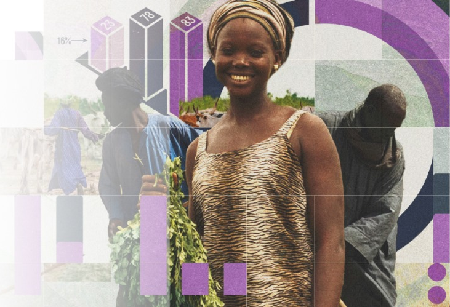
Photo: The status of land tenure and governance cover art. Source: FAO.
|