HIC @ 50: Advancing Norms
The year 2026 marks the 50th anniversary of Habitat International Coalition, founded at the first UN Conference on Human Settlements (Habitat I), Vancouver, B.C., in 1976. This half-century journey culminates now in a celebration of global solidarity and a redoubled commitment to continue the work needed toward realizing a human rights habitat, beginning with the core struggle for adequate housing for all. This also calls for reflection on the milestones along the way.
As HIC was founded on a global policy process, the evolution of international normative development is the special focus of its HLRN. That human rights-specialized structure emerged within HIC in 1991 to advocate the development and implementation of norms related to the human right to adequate housing and its land component. One of the key issues at Vancouver was equitable and sustainable land governance, as indeed it remains today.
At Habitat I, states recognized that “The ideologies of States are reflected in their human settlement policies. These being powerful instruments for change, they must not be used to dispossess people from their homes and their land, or to entrench privilege and exploitation. The human settlement policies must be in conformity with…human rights.”
The Vancouver Statement on Land acknowledged that “Land, because of its unique nature and the crucial role it plays in human settlements, cannot be treated as an ordinary asset, controlled by individuals and subject to the pressures and inefficiencies of the market.” It notes also that “Private land ownership is also a principal instrument of accumulation and concentration of wealth and, therefore, contributes to social injustice; if unchecked, it may become a major obstacle in the planning and implementation of development schemes.
Only months after the General Assembly (GA) adoption of the “Zionism is racism” resolution, the Israel/Palestine debate at Habitat I nearly scuttled the agreement. That history also has its continuity in the present.
Since social justice was a central objective of Habitat I, urban renewal and development were considered in that frame. The conference concluded that “the provision of decent dwellings and healthy conditions for the people can only be achieved if land is used in the interests of society as a whole.” That recognition was later refined in the most-recent iteration of the Habitat Agenda 40 years later in 2016’s New Urban Agenda (NUA) as states’ repeated their commitment to ensure “the social and ecological functions of land.”
The vision at Vancouver focused also on “appropriate recapture” of unearned profits that result from a rise in land values. That foresight predated Colombia’s groundbreaking 1997 plusvalía Law 388 by more than two decades.
From Locally Progressive to Globally Connected
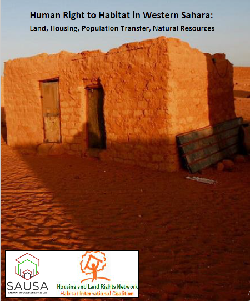
Just after HIC’s democratic 1987 shift as a human rights-based movement, HIC’s Board met at Berlin in 1988 and resolved to focus HIC’s global action beyond slums to encompass also the great global housing and habitat-related struggles raging at the time: Palestine, Indigenous Peoples, Tibet, Roma, Western Sahara, East Timor and apartheid South Africa.
Habitat I and, by extension, HIC mobilization ushered in a period of normative development and discovery. By 1991, when HIC Members initiated human rights development as the eventual Housing and Land Rights Network (HLRN), that initiative accompanied the UN’S Committee on Economic, Social and Cultural Rights (CESCR) articulating the content of the human right to adequate housing, legally defining housing adequacy. Two years later, HIC-HLRN was active in the UN Sub-commission, defining the human rights dimensions of population transfer, a composite crime against humanity involving forced evictions on a grand scale.
That enduring standard soon focused on the preventive and remedial functions of that human right when the UN Commission on Human Rights “affirmed forced eviction to be a gross violation of human rights, in particular the right to adequate housing” in 1993. CESCR legally elaborated that violation in 1997 with obligatory safeguards to ensure a lawful eviction, and prohibiting forced eviction. The Commission reaffirmed that designation in 2004.
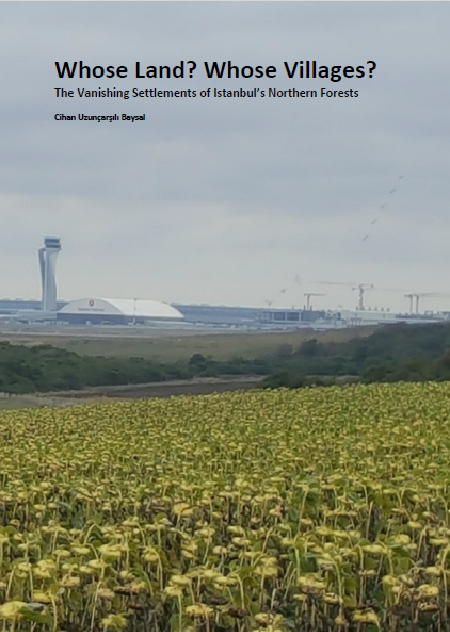
Habitat II (1996) redrew the global Habitat Agenda at Istanbul with commitments inside a conference surrounded by contradictions. The Habitat II Agenda committed states 61 times to implement their treaty-bound duty to ensure the “progressive realization of the human right to adequate housing,” but preceding and surrounding the conference were six years (1991–96) through which the army of Türkiye (Habitat II’s host) razed and immolated over 3,500 Kurdish villages, forcing the eviction, dispossession and urbanization of Türkiye`s largest minority population. That composite gross violation was the subject of HIC’s first fact-finding mission, and the occasion to form the HIC-HLRN Solidarity Network of peoples under occupation and alien domination (Kurds, Palestinians and Tibetans, to which Western Sahrawis also belong).
The World Social Forum (WSF) provided a context for HIC Members to crystalize the “right to the city” concept and for urban social movements to adopt the World Charter on the Right to the City in 2005, with ambition that its definition would lead to codification as a human rights. Although the right to the city could not meet the universality test of a bona fide human right, the notion has attracted critical thinking about its contents such as the social function of the city and social production of habitat.
One year later, the General Assembly finally resolved (without a vote) to define remedy and reparations for such gross violations, following 30 years of deliberation through the UN Human Rights System. 2006 was also the year of the first International Conference on Agrarian Reform and Rural Development (ICARRD), where further deliberation on habitat-related human rights was centered. That conference led to the global policy Guidelines for the Responsible Governance of Land, Fisheries and Forests (VGGT). That joint effort of states and civil society saw HIC-HLRN negotiating its complement in the form of the global policy Framework for Action for Food Security and Nutrition in Protracted Crises (FFA) in 2015.
The double anniversary of the remedy and agrarian-reform standards in 2026 saw the second ICARRD, with government, academic and civil society input. A convergence (coherence) of the development policy framework and the human rights one would have propelled a more progressive ICARRD+20 outcome declaration. However, the norms—both binding human rights obligations and voluntary development commitments—are advancing with demonstrated civil unity and social force. The process was an exercise in the urban/rural/Indigenous convergence that HIC has promoted in the WSF and elsewhere since 2009.
Straddling Pillars
Across the Habitat Agendas, HIC has pressed for holistic implementation, emphasizing states’ commitments to a disciplined human rights approach to housing and human settlements. The inspired Vancouver vision has not always prevailed in UN Habitat operations, as in the way with many such foregone epiphanies when institutional constraints intervene.
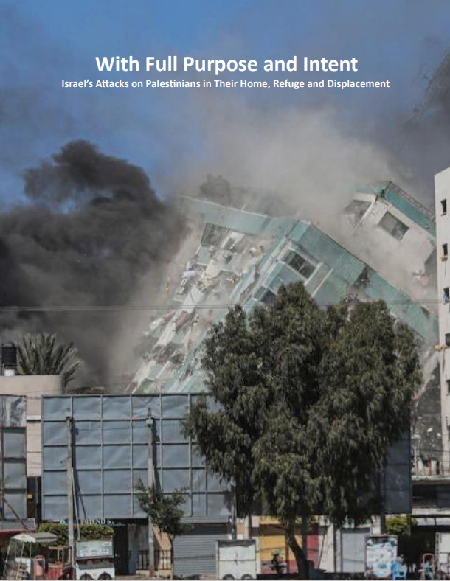
HIC’s hybrid human rights approach to human settlements development seeks a higher vantage point with a view across all three UN-chartered pillars (human rights, forward development, with peace and security). It has accompanied the Human Rights System, especially CESCR, to make great advances in clarifying the human right to adequate housing in both legal theory and practice. In 1998 and 2001, CESCR cracked the code of how Zionist institutions impose housing and land apartheid throughout historic Palestine. The following discoveries have made legal history that could ground claims for transitional justice, including reparation. One related HLRN proposal has been to repurpose the Zionist population-transfer institutions (i.e., World Zionist Organization/Jewish Agency and Jewish National Fund), their specialization and assets to instead operate as competent mechanisms for reparations to the Palestinian People.
In the lineage of expert advice into the norm-setting process, the author of International Law from Below, became the UN Human Rights Council’s fourth Special Rapporteur on adequate housing in 2020. The previous three pioneered evidence-based normative development and implementation guidelines. Each discovery has enriched the discourse across disciplines, using human rights law. The tradition celebrated its quarter century in 2025, with all four Special Rapporteurs to date, led by HLRN’s first coordinator taking up the first mandate in 2000.
Advancing Development Agendas
The post-2015 UN development agenda refined the 2000 Millennium Development Goals as the “2030 Agenda for transforming our world” amid promises to align development with human rights and merge assets and data across the system. The Agenda’s Sustainable Development Goal (SDG) 11 seeks to “Make cities and human settlements inclusive, safe, resilient and sustainable” and “ensure access [sic] for all to adequate, safe and affordable housing” by 2030. HIC’s engagement with the monitoring High-level Political Forum has emphasized the convergence of human rights obligations in pursuit of the SDGs.
As the Habitat II Agenda expired in 2016, UN Habitat leadership determined to narrow the global policy’s scope into a “New Urban Agenda,” which effectively excluded UN Major Groups and Other Stakeholders, namely Indigenous Peoples and small-scale farmers. Throughout the negotiation process toward the new Agenda, HIC called for three constants: (1) maintaining the inclusive habitat (pan-rural-urban) scope, (2) grounding the Agenda in human rights implementation and (3) maintaining at least the level of civil society participation as in the Habitat II process.
As with every global policy reiteration, Habitat II produced some gains and some losses. While states degraded the relevant human rights content in the Agenda, they did rediscover the “rural-urban nexus” (i.e., habitat approach) as foreseen as necessary to implement the Agenda, and make repeated commitments to ensure the social and ecological functions of land, and support social production of habitat. For the occasion at Quito, HIC Members also advocated these commitments, and HLRN produced its annual World Habitat Day report from the Violation Database for the first time dedicated to a single country. Turkey: Forced Eviction and Urban Transformation as a Tool of War evoked memories of the practice 20 years ago, when that country hosted Habitat II after ethnically cleansing its Kurdish villages, while this time targeting Kurdish cities with urban warfare.
In addition to regular country-specific monitoring and parallel reporting to CESCR, HIC’s HLRN joined civil partners to urge the Committee to adopt a General Comment on land. Among 100 inputs, HIC-HLRN’s submission was one of only three claiming—and calling for the Committee to recognize—a “human right to land.” HIC-HLRN was the only one to present a precedent- and science-based argumentation for recognizing that right. CESCR’s late-2022 General Comment No. 26 fell short of that recognition, but did establish land rights to mean “equitable and sustainable access to, use of, and control over land,” having discovered that ‘access’ in the enjoyment of any substantive right is never enough.
Forward
A lesson learned and lived since 1976 is that norm development and implementation are both a hard slog that requires dedication over laborious years. While the UN Human Rights Council and General Assembly both recognized a clean, healthy and sustainable environment to be a new human right in 2021–22. The normative content and corresponding state obligations of that right still need elaboration, but the Inter-American Court of Human Rights and International Court of Justice each contributed Advisory Opinions to filling that need in the context of climate change.
With these positive developments, the Stockholm+50 conference in 2022, however, reminded us how much normative development is still to be done. It was at the original Stockholm Conference on the Human Environment, in 1972, where “ecocide” was first proposed for codification as an international crime, but, like “domicide,” remains on the list of future advancement.
Image: HIC’s 50th anniversary commemorative logo. Source: HIC.
|